|
Contact service[@]hpcosmos.com for further details about the device models
and software versions.
The coscom from version 2.03.1 and higher is also designed for communication with
and control of bicycle ergometers.
h/p/cosmos offers a
converter from USB interface on computers to RS232 interface ports on host
devices, like treadmills, etc. h/p/cosmos order number cos12769-01
h/p/cosmos® undertakes utmost efforts in providing compatibility to
the existing coscom protocol, even if there were updates for improvements and
additions to the coscom protocol in future. h/p/cosmos always focuses on
downward compatibility of the coscom protocol. In 2008 h/p/cosmos introduced a
new coscom version called v3. This version introduced several new features and a
new communication model which stays abreast of changes in modern software
development. coscom v3 is actually not compatible with older versions but
further versions will be downward compatible with this version.
In Autumn 2017 the new
coscom v4 has been introduced and offers simplified
solutions for remote control of treadmills and ergometers.
As a special support h/p/cosmos offers the h/p/cosmos coscom.dll file for fast
and comfortable implementation of the h/p/cosmos coscom v1 and v2 protocol into
devices and software. The support for this v1 and v2 dll will end on 31.12.2010.
Please upgrade existing software to the new coscom v3 .NET Objects and Controls.
As a special support h/p/cosmos offers a set of Microsoft .NET libraries, the so
called h/p/cosmos coscom v3 .NET Objects, for fast and comfortable
implementation of the new h/p/cosmos coscom v3 protocol into devices and
software.
For creating GUI graphical user interfaces, h/p/cosmos offers the so called
h/p/cosmos coscom v3 .NET Controls. This set of Microsoft .NET Libraries is
designed for fast and comfortable integration of some coscom v3 features into
the graphical user interfaces of your software.
All of us (manufacturers, R & D software programmers, service engineers, etc.)
have the potential of improving the coscom protocol when dealing with these
issues during development and service issues. Any suggestions to improve the
coscom protocol are welcome at any time and will be evaluated for update in the
next version quickly for the benefit of all parties involved.
After implementation of the h/p/cosmos coscom protocol into devices and
software, extended tests of the communication must be performed with detailed
documentation for safety reasons. Send your device and/or software to h/p/cosmos
with a complete description of the test routine and h/p/cosmos will do its
utmost to assist in testing the interface communication and cross-check with
your test results.
As an alternative h/p/cosmos can offer a special hardware simulator (only the
UserTerminal of a treadmill, a very handy device) at no charge for 4 weeks, in
order to link the systems and to test the communication. Please make a
documentation of the interface communication between your host device and the
h/p/cosmos MCU simulator (for example use a
data logger or data
recorder) and send this protocol to h/p/cosmos for verification/validation and
documentation process. This is obligatory also based on the latest norms (e.g.
IEC EN 62304) and risk management.
Contact service[@]hpcosmos.com for
further details.
Important implementation notes for programmers for
safety relates issues can be downloaded and are stipulated in the file:
20091022_cos100115_h-p-cosmos_coscom_v3_protocol_implementation_notes.pdf
An overview about all relevant documents can be downloaded:
a)
20240418_cos100115v4_hpcosmos_coscom_v4_interface_protocol_treadmills_ergometers_admin_OP.pdf
b)
20220621_cos100115v4_hpcosmos_coscom_v4_ExtendedRemoteService.pdf
c)
20250108_hpcosmos_coscom_v4_QA_RA_release_document_sample.docx
d)
20211201_regulatory_requirements_coscom_v4_interface_protocol_treadmill_control_hpcosmos.pdf
d)
20091022_cos100115_h-p-cosmos_coscom_v3_overview.pdf
e)
20120103_cos100115_h-p-cosmos_coscom_v3_treadmill_ecg_device_control_example.pdf
TMX 425, TMX428, TMX428CP, TMX58 or T2100 or other interface
emulations:
Warning and Disclaimer!
This interface protocol is not validated by h/p/cosmos and not released for
medical applications in compliance with standard EN 62304 and regulatory
compliance.
The system producer / configurator (economic operator) is responsible and liable
for sufficient testing, release, validation, regulatory compliance (also MDR
(EU) 2017/745 and risk management) and documentation of these combined devices
(h/p/cosmos treadmill and external control device, such as ECG, CPET, stress
test device, etc.) in case of utilizing this protocol emulation.
h/p/cosmos rejects all claims and all liability for any issues related to the
usage of the this interface protocol.
h/p/cosmos validates and recommends only the
coscom v4 interface protocol. See
www.coscom.org
Latest warnings and FSN Field Safety Notices see website:
https://www.hpcosmos.com/en/safety
All h/p/cosmos coscom v3 documents including dll files, libraries, XDOP
descriptions and tutorials can be downloaded in a ZIP file:
20091022_cos100115_h-p-cosmos_coscom_v3_Tutorial.zip
coscom v4 DLL
download:
20210212_cos100115-v4_hpcosmos_coscom_v4_dll_V1.1.0.0.zip
Possible risks, threats and scenarios if some safety features were not
implemented:
https://www.hpcosmos.com/en/news/interface-control-treadmills-risks-non-compliance-safety-features
https://www.hpcosmos.com/sites/default/files/uploads/images/20210622_hpcosmos_fsn_field_safety_notice_ref210623-77541_vf2021-0602_sf2021-0639_cos30027va06-0020_treadmill_interface_control.pdf
Some applicable directives, regulations, norms, standards and legal /
regulatory requirement when connecting medical devices
(for example treadmills) to medical systems (for example ECG stress test system):
[1]
EN ISO 14971
risk management for medical devices
[2]
IEC 62304 Medical device software - Software life cycle processes
[3]
MDR
Medical Device
Regulation
(EU) 2017/745
MDD Medical Device Directive
93/42/EEC
(for legacy devices)
[4]
MDD Medical Device Directive
2007/47/EC
(for legacy devices)
[5]
Machinery Directive
2006/42/EC (previous version 98/37/EC)
[6]
ISO
20957-1 European
Standard stationary training equipment. General safety
requirements and test methods
[7]
EN 957-6 European
Standard
for treadmills
[8]
EN 60601-1 (3rd edition) Medical Electrical Equipment
[9]
EN 60601-1-4 Programmable Electrical Medical Systems
[10]
IEC 60601-1-6, IEC 62366-1
Usability for medical devices
[11]
DIN EN 61000-6-1,
DIN EN 61000-6-3 and
IEC 60601-1-2
for EMC
Electromagnetic compatibility
[12]
CE-mark with 4-digit number
German Medical Device Law Implementation Act
(MPDG – Medizinprodukterecht-Durchführungsgesetz)
German Product Safety Act (Produktsicherheitsgesetz -
ProdSG) > for sports
devices
IEC 60335-1 > for sports devices
Medical
running machines (treadmills) are active medical devices (therapeutic devices
and rehabilitation devices) of the risk class IIb.
Always use IEC 60601-1 approved potential isolation
components when linking medical devices via interface.
If the equipment is used in the field of medicine, all connected devices and
host equipment must be linked with potential equalization cables. First connect
the potential equalization cable with the corresponding potential equalization
plug pin (next to the main switch at the front of the h/p/cosmos device), then
connect the entire medical system to the main potential equalization terminal of
the medical room and then connect the mains voltage power plug of the medical
system.
----
Article 12 of MDD Directive 93/42/EEC:Particular procedure for
systems and procedure packs
1. By way of derogation from Article 11 this Article shall apply to
systems and procedure packs.
2. Any natural or legal person who puts devices bearing the CE marking
together within their intended purpose and within the limits of use
specified by their manufacturers, in order to place them on the market as a
system or procedure pack, shall draw up a declaration by which he states
that:
(a) he has verified the mutual compatibility of the devices in accordance
with the manufacturers' instructions and has carried out his operations in
accordance with these instructions; and
(b) he has packaged the system or procedure pack and supplied relevant
information to users incorporating relevant instructions from the
manufacturers; and
(c) the whole activity is subjected to appropriate methods of internal
control and inspection.
Where the conditions above are not met, as in cases where the system or
procedure pack incorporate devices which do not bear a CE marking or where
the chosen combination of devices is not compatible in view of their
original intended use, the system or procedure pack shall be treated as a
device in its own right and as such be subjected to the relevant procedure
pursuant to Article 11.
3. Any natural or legal person who sterilized, for the purpose of placing
on the market, systems or procedure packs referred to in paragraph 2 or
other CE-marked medical devices designed by their manufacturers to be
sterilized before use, shall, at his choice, follow one of the procedures
referred to in Annex IV, V or VI. The application of the abovementioned
Annexes and the intervention of the notified body are limited to the aspects
of the procedure relating to the obtaining of sterility. The person shall
draw up a declaration stating that sterilization has been carried out in
accordance with the manufacturer's instructions.
4. The products referred to in paragraphs 2 and 3 themselves shall not
bear an additional CE marking. They shall be accompanied by the information
referred to in point 13 of Annex I which includes, where appropriate, the
information supplied by the manufacturers of the devices which have been put
together. The declaration referred to in paragraphs 2 and 3 above shall be
kept at the disposal of competent authorities for a period of five years.
Article 22 of
MDR MEDICAL DEVICE REGULATION (EU) 2017/745
Systems and procedure packs
1. Natural or legal persons shall draw up a statement if they combine
devices bearing a CE marking with the following other devices or products,
in a manner that is compatible with the intended purpose of the devices or
other products and within the limits of use specified by their
manufacturers, in order to place them on the market as a system or procedure
pack:
(a) other devices bearing the CE marking;
(b) in vitro diagnostic medical devices bearing the CE marking in conformity
with Regulation (EU) 2017/746;
(c) other products which are in conformity with legislation that applies to
those products only where they are used within a medical procedure or their
presence in the system or procedure pack is otherwise justified.
2. In the statement made pursuant to paragraph 1, the natural or legal
person concerned shall declare that:
(a) they verified the mutual compatibility of the devices and, if applicable
other products, in accordance with the manufacturers' instructions and have
carried out their activities in accordance with those instructions;
(b) they packaged the system or procedure pack and supplied relevant
information to users incorporating the information to be supplied by the
manufacturers of the devices or other products which have been put together;
(c) the activity of combining devices and, if applicable, other products as
a system or procedure pack was subject to appropriate methods of internal
monitoring, verification and validation.
3. Any natural or legal person who sterilises systems or procedure packs
referred to in paragraph 1 for the purpose of placing them on the market
shall, at their choice, apply one of the procedures set out in Annex IX or
the procedure set out in Part A of Annex XI. The application of those
procedures and the involvement of the notified body shall be limited to the
aspects of the procedure relating to ensuring sterility until the sterile
packaging is opened or damaged. The natural or legal person shall draw up a
statement declaring that sterilisation has been carried out in accordance
with the manufacturer's instructions.
4. Where the system or procedure pack incorporates devices which do not bear
the CE marking or where the chosen combination of devices is not compatible
in view of their original intended purpose, or where the sterilisation has
not been carried out in accordance with the manufacturer's instructions, the
system or procedure pack shall be treated as a device in its own right and
shall be subject to the relevant conformity assessment procedure pursuant to
Article 52. The natural or legal person shall assume the obligations
incumbent on manufacturers.
5. The systems or procedure packs referred to in paragraph 1 of this Article
shall not themselves bear an additional CE marking but they shall bear the
name, registered trade name or registered trade mark of the person referred
to in paragraphs 1 and 3 of this Article as well as the address at which
that person can be contacted, so that the person's location can be
established. Systems or procedure packs shall be accompanied by the
information referred to in Section 23 of Annex I. The statement referred to
in paragraph 2 of this Article shall be kept at the disposal of the
competent authorities, after the system or procedure pack has been put
together, for the period that is applicable under Article 10(8) to the
devices that have been combined. Where those periods differ, the longest
period shall apply.
----
Accessory equipment connected to the analog and digital interfaces must be
certified according to the respective IEC standards, e.g. IEC 950 for data
processing equipment and IEC 60601-1 for medical equipment. Furthermore all
configurations shall comply with the valid version of the system standard
IEC 60601-1-1. Everybody who connects additional equipment to the signal
input port or signal output port or via any other linkage possibility,
configures a medical system, and is therefore responsible that the system
complies with the requirements of the valid version of the system standard
IEC 60601-1-1. (MDD: 13.6.c, IEC 60601-1).
When connecting medical devices to a medical system
and/or when putting a company sign/logo/mark on a medical device, you become the
manufacturer of this new device/system and you are responsible for CE-marking,
technical documentation, risk management and all obligations based on MDD and
the respective local laws and norms.
E & OE. Subject to alterations without prior notice.
h/p/cosmos is not liable for any damage and/or injuries arising from
incompatibility or malfunction of host devices and/or software during
controlling and communication between any of the systems, especially if no valid
and implemented and signed
quality assurance and regulatory affairs agreement exists.
Copyright 1992 - 2024 h/p/cosmos sports & medical gmbh / Germany.
All rights reserved.
Copyright, Disclaimer and Legal Notice.
The implementation and use of the coscom protocol in other devices (not
manufactured by h/p/cosmos) and in other software (not manufactured by
h/p/cosmos) is only permitted, if h/p/cosmos sports & medical gmbh has agreed to
the implementation and usage of coscom prior in writing and if the
quality assurance and regulatory affairs agreement
including release document has been signed between
the h/p/cosmos sports & medical gmbh and the other party and if this
quality assurance and regulatory affairs agreement is fully implemented.
coscom v3 and coscom v4 have been developed for the control of h/p/cosmos treadmills and
other h/p/cosmos ergometers and other h/p/cosmos products and shall support
manufacturers of ECG, ergospirometry and software manufacturer to utilize a safe
and sophisticated interface protocol, which is maintained and updated according
to latest regulatory affairs standards.
As a contribution to h/p/cosmos' efforts for development and updating the
coscom protocol and the coscom.dll, all users of the coscom protocol and coscom
features who received the permission of use in writing, are obliged to list the
name and company logo h/p/cosmos and the Copyright of h/p/cosmos in their
software menu and their user/operation manual on a well visible position.
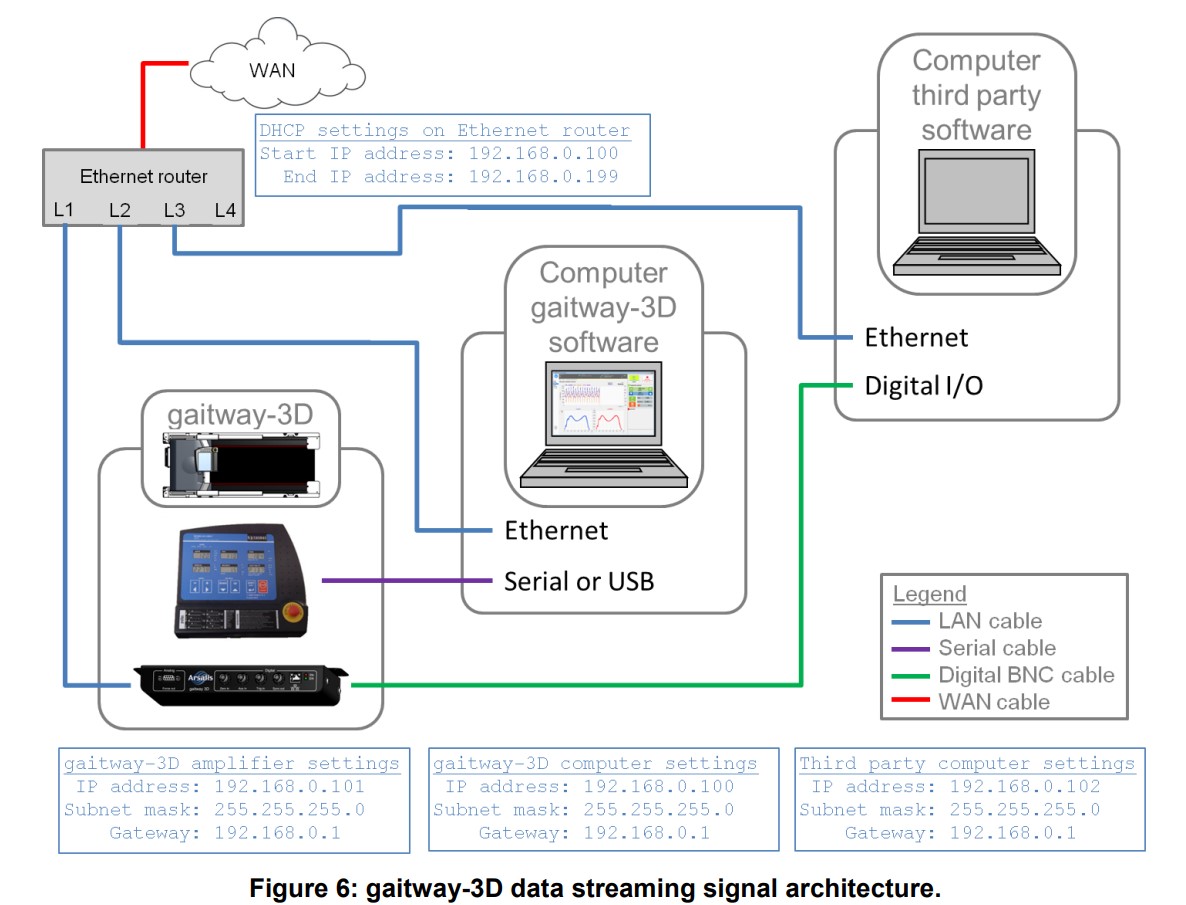
gaitway 3d biomechanics treadmill with
3-component force sensors
gaitway 3D data streaming signal architecture via LAN /
Ethernet RJ45
Download gaitway data streaming integration manual:
https://www.hpcosmos.com/sites/default/files/uploads/documents/20220802_cos102999_hpcosmos_tm-icd-0004-ars_a6_gaitway-3d_data_streaming_icd.pdf
MCU6 Hardware and Software Simulator:
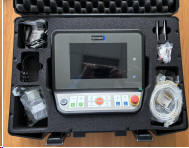
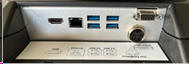
Download MCU6 Hardware and Software Simulator manual:
https://cloud.hpcosmos.com/s/yPQ4Fk37zEndMir
|